
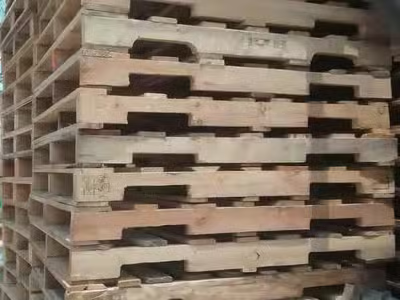
If you have used pallets stacking up behind your warehouse, somebody will pay you for them. The U.S. has roughly 3,000 active pallet recyclers, several hundred pallet brokers, and a long tail of end-users who buy direct. Used wood pallets typically sell for $0.50–$8 each depending on grade, size, and quantity — and at a full truckload (480 to 680 pallets) the buyer comes to you.
This guide covers the four kinds of pallet buyers, how pricing works, what your pallets are actually worth, and how to find a buyer near you — whether you have 10 pallets or a full truckload.
Key takeaways
- Buyer types: recyclers, brokers, end-users, and online marketplaces — each pays a different price
- Pricing: Grade A $4–$8, Grade B $2–$5, Grade C $0.50–$2 per pallet
- Truckload minimum: free pickup needs a full 53-foot van, 480 to 680 pallets in 26 to 30 stacks, 16 high on 6.5-inch new pallets up to 22 on 5-inch stock (23 on 4.75-inch) — below that, you deliver or sell locally
- Pickup is free at full-truckload volume — never pay to "have your pallets removed" when you have a van's worth
- The 48 × 40 GMA is the most valuable pallet by a wide margin — odd sizes are harder to move
Who buys pallets — the four buyer types
Different buyers serve different volumes, locations, and pallet conditions. The right buyer for your situation depends on how many pallets you have, what they're worth, and how fast you need them gone.
Buyer type | Volume they want | What they pay | Pickup | Best for |
|---|---|---|---|---|
Pallet recyclers | Full truckload (480–680 pallets) | Per-pallet, by grade | Free if truckload | Steady weekly volume from manufacturers, distributors, retailers |
Pallet brokers | Full truckload (480–680 pallets) | Best price for clean GMA | Free, scheduled | Larger sites with consistent supply |
Direct end-users | Any volume | Higher per-pallet, sometimes 2x recyclers | Sometimes free | Small batches, specialty sizes, custom requirements |
Online marketplaces (Repackify, Facebook, Craigslist) | Any volume | Market-driven; often best price | Variable — sometimes you deliver | Mixed grades, odd sizes, one-time disposal |
1. Pallet recyclers
The 3,000+ pallet recycling companies in the U.S. are the workhorse buyers — they pick up used pallets, sort by grade, repair what's repairable, and resell into local supply chains. Most recyclers run a hub-and-spoke model: they have a yard, route trucks to suppliers, and resell into a 50–100 mile radius.
What they buy: standard sizes (48 × 40 GMA first, then 48 × 48 drum, 42 × 42, etc.). Grade A through C.
What they pay: per-pallet rates by grade. Pricing set by their cost to repair vs. resell.
How to find one: Google "pallet recycler [your city]" or use industry directories like the National Wooden Pallet and Container Association (NWPCA).
2. Pallet brokers
Brokers don't physically handle pallets — they connect supply (you) with demand (manufacturers, distributors, food and beverage accounts). They typically pay slightly more than recyclers because they're moving direct to end-use rather than through a repair yard.
What they buy: Grade A and clean Grade B GMA in full truckloads (480 to 680 pallets).
What they pay: $5–$10 per Grade A 48 × 40, delivered or picked up.
How to find one: ask manufacturers in your area who supplies their pallets, or work with a marketplace that connects you directly with brokers.
3. Direct end-users
Manufacturers, breweries, building suppliers, agricultural operations, and retailers buy used pallets directly when their volume justifies it. Direct sales typically pay 20–50% more per pallet than recyclers because there's no middleman — but you also need to deliver and the buyer has to want exactly what you have.
What they buy: consistent sizes and grades that match their internal supply chain.
What they pay: 1.2–2× recycler rate for the right spec.
How to find them: local industrial directories, LinkedIn outreach, or via online pallet marketplaces that route directly to end-buyers.
4. Online marketplaces
For mixed grades, odd sizes, or one-time disposals, online marketplaces (Repackify, Facebook Marketplace, Craigslist, OfferUp) often deliver the best price because they put your specific pallets in front of any buyer in the country, not just the local recycler.
What works on which platform: Repackify for any volume direct to buyers; Facebook Marketplace and Craigslist for small batches (1–50 pallets) to local hobbyists and small contractors.
Pro tip: hobbyists building furniture or accent walls will pay $5–$15 each for clean Grade B 48 × 40 pallets — far above recycler rates — but only buy 1–10 at a time.
How much do used pallets sell for?
Pricing varies by grade, size, region, and quantity. Here are the 2026 ranges for used 48 × 40 GMA pallets — the most common and valuable size on the market:
Grade | Condition | Per pallet (sold to recycler) | Per pallet (sold direct) |
|---|---|---|---|
Grade A (#1) | Like new — straight, no broken boards, repairs only with new components | $4–$8 | $8–$14 |
Grade B (#2) | 1–2 repaired boards, minor stains; the most common reused tier | $2–$5 | $4–$7 |
Grade C (#3) | Visible repair, structurally sound but not export-grade | $0.50–$2 | $1–$3 |
Scrap / unrepairable | Broken stringers or unsafe; bound for chipping | $0–$0.50 | $0–$0.50 |
What makes pallets worth more (or less)
Five factors decide what a buyer will pay:
Size. 48 × 40 GMA is the gold standard. 48 × 48 drum pallets and 42 × 42s are second tier. Anything custom or undersized drops 30–60%.
Grade. See the chart above. Grade A doubles Grade B; Grade B doubles Grade C.
Volume. A full truckload (480 to 680 pallets) gets you free pickup and the high end of pricing. 50 pallets gets you the low end. 10 pallets gets you "drop them off."
Location. Pallets near major distribution hubs (LA, Chicago, Atlanta, Dallas, NJ/NY) move faster and sell higher than rural areas.
Heat-treated stamp. HT-stamped pallets sell for a small premium — see our heat treated pallets and ISPM-15 guide for the spec details.
How to find a pallet buyer near you
Three approaches, in order of effort:
1. Online marketplace (10 minutes, best price for any volume)
Post your pallets — size, grade, quantity, location, photos — on Repackify, Facebook Marketplace, or Craigslist. Buyers come to you. For truckload volumes, Repackify routes you directly to brokers and recyclers in your radius.
2. Search "pallet recycler near me" (30 minutes, local)
Google your zip code + "pallet recycler" or "pallet buyer." Call 3–5 local yards, give them sizes and quantities, and ask for a per-pallet price plus pickup terms. Get quotes from at least 3 — pricing varies 25–50% between yards in the same metro.
3. Walk into a manufacturer's loading dock (most effort, best price)
For Grade A truckload volumes, the highest-paying buyer is the end manufacturer using the pallets. Cold-call shipping managers at local food, beverage, or building product manufacturers — many will buy direct at 20–50% above recycler rates if you can deliver consistent sizes and grades.
How to prep pallets for sale
Spending 30 minutes prepping a load can add 20–30% to its value:
Sort by size. Mixed-size loads sell at the lowest common denominator. Separate 48 × 40s from 48 × 48s from odd sizes.
Sort by grade. Don't bury Grade A pallets in a Grade B pile — buyers pay more for graded loads.
Stack consistently. Band or shrink-wrap stacks of 20 on 5-inch stock (100″, under the 105″ rear door); the buyer adds the 21st and 22nd pallet inside the trailer. Loose stacks aren't loadable.
Pull obvious junk. Broken stringers, missing deckboards, exposed nails — these drag the whole load down.
Photograph the load. Buyers are quoting blind otherwise. A few clear photos on a phone get you 10–20% better quotes.
Selling small quantities (under 50 pallets)
Small quantities don't move easily through the truckload market. Your options:
Facebook Marketplace / Craigslist: hobbyists and small contractors will pay $5–$15 per Grade B 48 × 40 — best per-pallet pricing, but you handle pickup logistics yourself.
Local recycler with paid pickup: some recyclers will pick up 30–50 pallets for a small fee or break-even.
Drive them to the recycler yourself: if you have a pickup truck, you can usually load 6–10 pallets and drive them in for a same-day cash payment.
For smaller volumes of other packaging (totes, drums), see our companion guide on where to source small quantities — many of the same logic applies for selling.
Selling truckload quantities (480 to 680 pallets)
At truckload volume, pickup is always free and pricing is best. Three things buyers want to know upfront:
What's on the load? Sizes, grades, count of each.
When are they ready? Same-day pickup is rare; 24–72 hours is normal.
Will this be ongoing? Recurring weekly volume gets locked-in pricing 5–15% above one-time sales.
For ongoing weekly pickup ("pallet drop trailer programs"), see our drop trailer program guide — it's the right answer for any operation generating a truckload (480 to 680 pallets) per month.
Frequently asked questions
Who buys pallets near me?
Pallet recyclers, brokers, end-user manufacturers, and online marketplace buyers all buy used pallets. The closest option is usually a local pallet recycler — Google "pallet recycler [your city]" to find one. For better pricing on truckload volumes, list on a marketplace like Repackify that routes to multiple buyers nationally.
How much can I sell pallets for?
In 2026, used 48 × 40 GMA pallets sell for $4–$8 (Grade A), $2–$5 (Grade B), or $0.50–$2 (Grade C) per pallet sold to a recycler. Direct sales to end-users pay 20–100% more. Hobbyists on Facebook Marketplace will pay $5–$15 each for small quantities.
What's the best place to sell wood pallets?
For truckload volumes (a full truckload (480 to 680 pallets, 26 to 30 stacks, 16 high on 6.5-inch new pallets up to 22 on 5-inch stock, or 23 on 4.75-inch stock, in a 53-foot van)): an online marketplace like Repackify routes you to brokers and recyclers competing for your inventory. For small batches (under 50): Facebook Marketplace and Craigslist deliver the best per-pallet price because hobbyists pay above recycler rates.
Will pallet buyers pick up for free?
Yes, for a full truckload of standard sizes: 480 to 680 pallets, which is 26 to 30 stacks, 16 high on 6.5-inch new pallets up to 22 on 5-inch stock, or 23 on 4.75-inch stock, in a 53-foot van. Below that, pickup is variable — some recyclers charge a small fee, some break even, and below 30 pallets you'll usually deliver them yourself.
What's the most valuable pallet size?
The 48 × 40 GMA pallet — by a wide margin. It's the U.S. standard, every recycler wants them, and they sell for 10–30% more than the next-most-valuable sizes (48 × 48 and 42 × 42). See our standard pallet sizes guide for the full ranking.
Can I sell broken pallets?
Yes, but for very little — usually $0–$0.50 each. Broken pallets get chipped for mulch, biofuel, or animal bedding. For most sellers it's not worth the truck space; pile them separately and sell them to a chipping operation in bulk.
Do I need a license to sell pallets?
Not in most U.S. states for selling your own used pallets. Some states require business licenses for ongoing pallet resale operations. Check your state's industrial materials resale rules if you plan to operate as a pallet recycler.
How quickly can I sell pallets?
For truckload quantities of standard sizes in major metros, pickup can happen within 24–72 hours. Online marketplace listings typically get offers within a day. For small or odd-size lots, allow 1–2 weeks to find a local buyer.
Will buyers come to my warehouse?
For a full truckload (480 to 680 pallets), yes — pickup is part of the buyer's logistics. Below that threshold, you'll usually deliver. For ongoing weekly pickup, ask about pallet drop-trailer programs where the buyer leaves an empty trailer at your dock for continuous loading.
Bottom line
Used pallets are a $1B+ U.S. resale market with thousands of buyers and standardized pricing. The two questions that decide your outcome: how many pallets do you have, and are they 48 × 40 GMA? If the answers are "a full truckload, 480 to 680" and "yes," pickup is free, pricing is good, and you have leverage. If the answers are "30" and "odd sizes," you'll deliver and take what the local market pays.