
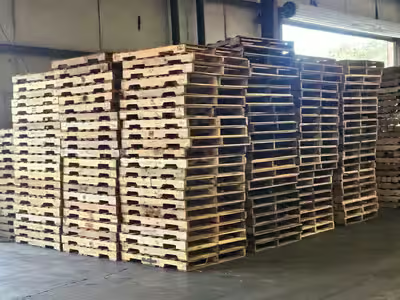
A standard 48 × 40 GMA wood pallet weighs 30–48 lbs empty, carries ~4,600 lbs dynamic load (when moved by forklift), ~7,500 lbs static load (sitting on the floor), and ~2,800 lbs racked (spanning a warehouse beam). Past those numbers, you risk pallet failure, racking collapse, OSHA violations, or all three.
This guide covers every common pallet's empty weight, its three load ratings, what changes the numbers, and how to spec a pallet that won't fail under your actual cargo.
Key takeaways
- Empty weight (48 × 40 GMA): 30–48 lbs depending on grade and wood species
- Dynamic load: ~4,600 lbs — the working ceiling for forklift handling
- Static load: ~7,500 lbs — sitting on a flat, level floor
- Racked load: ~2,800 lbs — spanning a standard rack beam unsupported
- Three numbers, three failure modes: exceed dynamic and the pallet breaks under the forklift; exceed racked and the pallet sags between beams
The three load ratings, explained
Every pallet manufacturer publishes three load capacities. They're different because the pallet is being stressed in different ways:
Rating | What it means | When it applies | Failure mode if exceeded |
|---|---|---|---|
Dynamic load | Maximum weight while the pallet is being moved by forklift, pallet jack, or conveyor | Loading docks, in-warehouse moves, truck loading | Stringers crack mid-lift; deckboards pop loose; cargo shifts and falls |
Static load | Maximum weight while sitting still on a flat, level floor | Floor stacking, bulk storage, ground-level holding | Pallet compresses or splinters; bottom deckboards crush |
Racked load | Maximum weight when the pallet spans warehouse rack beams unsupported in the middle | Selective racking, drive-in rack, push-back rack | Pallet sags or breaks between beams; cargo falls from height |
Empty pallet weight by type
How much the pallet itself weighs matters because it counts against your trailer's 45,000 lb cargo limit, your forklift's lift capacity, and any per-pallet shipping cost. An empty 48 × 40 GMA is 30–48 lbs; plastic and lightweight options can drop to 20 lbs; heavy block pallets can hit 75 lbs.
Pallet type | Footprint | Empty weight |
|---|---|---|
Wood — 48 × 40 GMA stringer | 48″ × 40″ | 30–48 lbs |
Wood — 48 × 48 stringer | 48″ × 48″ | 55–70 lbs |
Wood — 42 × 42 stringer | 42″ × 42″ | 35–45 lbs |
Wood — 36 × 36 stringer | 36″ × 36″ | 20–30 lbs |
Wood — block pallet (heavy-duty) | 48″ × 40″ | 55–75 lbs |
Wood — EUR / EPAL block | 1200 × 800 mm | 44–55 lbs (20–25 kg) |
Plastic — nestable HDPE | 48″ × 40″ | 20–30 lbs |
Plastic — rackable HDPE | 48″ × 40″ | 35–55 lbs |
Plastic — heavy-duty drum | 48″ × 48″ | 50–75 lbs |
Corrugated paper | 48″ × 40″ | 10–15 lbs |
Stringer presswood (molded) | 48″ × 40″ | 18–25 lbs |
Variations within the wood ranges come from wood species (oak vs. southern yellow pine vs. spruce), stringer thickness (1.375″ standard vs. thicker heavy-duty), and moisture content (kiln-dried vs. green lumber). Need pallet sizes too? Read our standard pallet sizes guide.
Load capacity by pallet type
Pallet type | Dynamic | Static | Racked |
|---|---|---|---|
Wood — 48 × 40 GMA (Grade A) | 4,600 lbs | 7,500 lbs | 2,800 lbs |
Wood — 48 × 40 (Grade B) | 3,500 lbs | 6,000 lbs | 2,200 lbs |
Wood — 48 × 40 block (heavy-duty) | 5,500 lbs | 30,000 lbs | 5,500 lbs |
Wood — EUR / EPAL block | 3,300 lbs (1,500 kg) | 8,800 lbs (4,000 kg) | 2,200 lbs (1,000 kg) |
Plastic — nestable HDPE | 1,500 lbs | 5,000 lbs | Not racking-rated |
Plastic — rackable HDPE | 5,000 lbs | 20,000 lbs | 2,800 lbs |
Plastic — heavy-duty drum | 5,000 lbs | 30,000+ lbs | 2,800 lbs |
Corrugated paper | 1,000 lbs | 2,500 lbs | Not racking-rated |
Stringer presswood | 1,500 lbs | 4,400 lbs | Not racking-rated |
How loaded pallet weight breaks down
A "loaded pallet" is the empty pallet plus its cargo. For trailer loading and freight quoting, what matters is total weight — and loaded weight varies dramatically by what you're shipping.
Cargo type | Typical loaded weight | Notes |
|---|---|---|
Beverage (cased soda, beer, water) | 2,500–3,000 lbs | Pushes the upper end of dynamic capacity |
Cased food (canned, dry goods) | 1,500–2,200 lbs | The grocery default |
Paper / cardboard | 800–1,500 lbs | Light by volume; volume-capped not weight-capped |
Building materials (drywall, tile) | 2,500–4,500 lbs | Often the heaviest legitimate pallet load |
Plastic / HDPE resin | 2,000–2,800 lbs | Bag-stacked, dense |
Steel parts / castings | 3,500–4,600 lbs | At the dynamic-load ceiling |
55-gallon drums (4 per 48×48) | ~2,000 lbs | Filled with water; less for lighter liquids |
What changes pallet load capacity
Five factors push the rated capacity up or down:
Wood species. Hardwoods (oak, maple) carry 15–30% more than softwoods (pine, spruce) at the same construction.
Stringer thickness. Standard 1.375″ stringers rate at the typical numbers; 2″+ stringers can bump dynamic load to 5,500–7,000 lbs.
Number of stringers / blocks. Standard GMA has 3 stringers; 4-stringer pallets and 9-block pallets carry more weight without sagging.
Deckboard count and thickness. 7 top deckboards is GMA standard; more boards = more contact with the load = better weight distribution.
Pallet condition. A repaired Grade B pallet carries 70–80% of a new Grade A's capacity. Don't load to spec on a beat-up pallet.
Pallet rack capacity vs pallet capacity
Two different ratings often get confused. Both matter, and the lower of the two is your real ceiling.
Rating | What it limits | Typical range |
|---|---|---|
Pallet load capacity (racked) | How much weight a single pallet can hold while spanning rack beams | 2,800 lbs (wood GMA) to 5,500 lbs (heavy-duty block) |
Rack beam capacity | How much weight the rack beams themselves can hold (across all pallets on the beam) | 2,500–6,000 lbs per beam pair |
Rack column / upright capacity | How much total weight the upright frames can carry across all beam levels | 20,000–40,000 lbs per upright pair |
OSHA and best-practice rules of thumb
Stack height. OSHA permits stacking up to 15 ft high depending on product type. Realistically, most operations cap at 8–10 ft of pallet stacks.
Even loading. Don't load weight on one side of the pallet — center of gravity matters. Off-center loads cause dynamic-load failures at far below rated capacity.
Strap or wrap unstable loads. Tall or shifting loads need shrink wrap, banding, or cross-tie patterns to keep cargo on the pallet during forklift moves.
Inspect before load. Broken stringers, missing deckboards, exposed nails, or visible cracks drop pallet capacity to whatever's lower of the rated value or zero.
Don't reuse single-use pallets. Some pallets (corrugated, presswood) are spec'd for one trip. Reusing them at rated capacity is a known failure pattern.
For long-term storage practices and warehouse layout considerations, see how to properly store wooden pallets.
Frequently asked questions
How much weight can a wooden pallet hold?
A standard 48 × 40 GMA wood pallet (Grade A) holds about 4,600 lbs while being moved by forklift, 7,500 lbs sitting on the floor, and 2,800 lbs spanning a warehouse rack beam. Heavy-duty block pallets can carry 5,500+ lbs in all three conditions; corrugated and presswood pallets hold far less.
How much does a pallet weigh empty?
A standard 48 × 40 GMA wood pallet weighs 30–48 lbs empty. EUR pallets (1200 × 800 mm) weigh 44–55 lbs. Plastic pallets weigh 20–55 lbs depending on construction. The lightest are corrugated paper pallets at 10–15 lbs.
What's the difference between dynamic and static load?
Dynamic load is the maximum weight the pallet can carry while being moved by forklift or pallet jack. Static load is the maximum weight while sitting still on a flat floor. Static is always higher because the floor supports the whole bottom; dynamic is what fails first under real-world handling.
What's the racked load capacity of a wooden pallet?
A standard 48 × 40 GMA pallet is rated for ~2,800 lbs when spanning warehouse rack beams unsupported in the middle. Heavy-duty block pallets can hit 5,500 lbs racked; nestable plastic pallets are not racking-rated at all.
Why is the racked load lower than dynamic or static?
When a pallet sits on rack beams, only the two outer stringers (or block rails) carry the load — the middle hangs in space. This puts the pallet under bending stress rather than compression, and bending is what wood pallets are weakest against.
How heavy is a pallet of water?
A typical pallet of cased bottled water (40 cases of 24 × 16.9 oz bottles) weighs ~1,800 lbs total. Filled 5-gallon water jugs (24 jugs per pallet) weigh ~1,000 lbs. A pallet of 4 × 55-gallon drums of water weighs ~2,000 lbs.
Can plastic pallets carry more weight than wood?
Heavy-duty rackable plastic pallets can carry similar or higher static loads (20,000+ lbs) than wood, but typically lower dynamic loads. Nestable plastic pallets carry far less than wood and aren't racking-rated. See our plastic pallets buying guide for the trade-offs.
How does pallet condition affect load capacity?
A repaired Grade B pallet carries roughly 70–80% of a new Grade A's capacity. Visibly damaged pallets (broken stringers, missing deckboards, cracked blocks) carry 0–50% of rated capacity and should not be used near rated loads.
Bottom line
A standard wood pallet is rated 4,600 lbs dynamic / 7,500 lbs static / 2,800 lbs racked — but those numbers assume new, Grade A construction in the right size for the load. In practice, what matters is matching the pallet spec to the cargo weight, the handling pattern, and the storage method, then leaving comfortable margin for handling damage and condition variation. When in doubt, spec one rating heavier than your math says you need.