
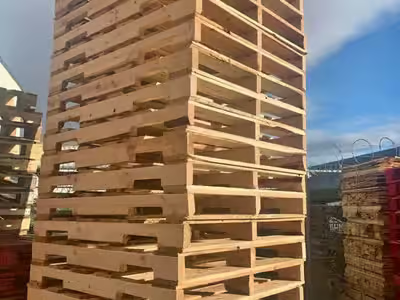
A GMA pallet is the 48″ × 40″ wooden stringer pallet that the Grocery Manufacturers Association standardized in the 1960s. It’s the single most common pallet in North America — roughly 30% of all new pallets produced in the U.S. each year are GMA pallets, and they account for the majority of pallets in active circulation. If someone says “a standard pallet” without qualifying it, they almost always mean a 48 × 40 GMA.
This guide covers exactly what makes a pallet a GMA pallet: its dimensions and construction, the Grade A / Grade B / recycled grading system that determines what you pay, its weight and load capacity, and current truckload pricing. If you just need the full size chart across every pallet footprint, start with our complete guide to standard pallet sizes and dimensions.
Key takeaways
- GMA pallet size: 48″ × 40″ (1219 × 1016 mm), 6.5″ tall new, about 5″ recycled
- Construction: wooden stringer pallet, partial four-way entry, ~7 top deckboards
- Grades: Grade A (premium), Grade B (economy), recycled, and remanufactured / combo
- Load capacity: ~2,800 lbs racked, ~4,600 lbs dynamic, ~7,500 lbs static
- Truckload price: typically $9–$15 (Grade A) or $5–$9 (Grade B / recycled) per pallet, region-dependent
What does GMA stand for?
GMA stands for the Grocery Manufacturers Association, the trade group (now the Consumer Brands Association) that standardized the 48 × 40 footprint in the 1960s to streamline grocery distribution. The goal was simple: if every manufacturer, broker, distributor, and retailer used the same pallet, freight could move through the supply chain without re-palletizing at each handoff. It worked — six decades later, the entire U.S. logistics network (truck trailers, warehouse racking, retail backrooms, pallet pools) is built around the 48 × 40 footprint.
You’ll hear the same pallet called a GMA pallet, grocery pallet, stringer pallet, or just standard pallet. They all refer to the same 48 × 40 design.
GMA pallet dimensions and specifications
A true GMA pallet follows a recognizable spec. Sizes are written stringer length first, deckboard length second — so “48 × 40” means 48-inch stringers and 40-inch top deckboards.
Spec | Measurement | Notes |
|---|---|---|
Footprint | 48″ × 40″ (1219 × 1016 mm) | The defining dimension |
Height | 6.5″ (165 mm) new; ~5″ recycled | Empty deck-to-floor height |
Empty weight | 30–48 lbs | Varies by grade, species, moisture |
Top deckboards | 7 boards | 5 wide spacing + 2 lead boards |
Bottom deckboards | 5 boards | Spaced for four-way entry |
Stringers | 3 (notched) | Allow partial four-way fork entry |
Fork entry | Four-way (partial) | Forklift any side; jack 2 sides |
Deckboard thickness | ~0.625″ | Lead boards often thicker |
GMA pallet grades — and what changes the price
“GMA” describes the size and design. The grade describes the condition — and grade is what actually drives the price. Here’s the standard grading ladder used across the recycled-pallet industry:
Grade | Condition | Typical use | Relative price |
|---|---|---|---|
Grade A (#1) | All original stringers, no plugs/repairs, clean & dry | Retail, food, exports, customer-facing loads | Highest |
Grade B (#2) | Repaired stringers, plugged or companion boards, still sound | Internal freight, warehouse, manufacturing | Mid |
Recycled / used | Inspected & functional, mixed cosmetic wear | Cost-sensitive shipping, one-way loads | Lower |
Remanufactured / combo | Rebuilt from salvaged parts of multiple pallets | Budget internal use | Lowest |
New / recycled premium | Brand-new lumber, kiln-dried | Pharma, sterile, spec-required loads | Premium |
The practical decision for most buyers is Grade A vs. Grade B. Grade A pallets have all original unrepaired stringers and present cleanly, so they’re used wherever the load is seen by a customer or has to pass a retailer’s receiving spec. Grade B pallets are structurally sound but show repairs — a plugged stringer or a companion board nailed alongside a cracked one — and cost meaningfully less for freight nobody outside your dock will ever see. For a deeper breakdown of how grading is assessed, see our guide to choosing the right pallet type.
GMA pallet weight and load capacity
Capacity depends on how the load sits. The three numbers that matter:
Static capacity is the most forgiving (the floor supports the whole pallet); racked is the most demanding (only the ends are supported, so the deck flexes). Always spec to the racked number if your pallets go into beam racking. An empty 48 × 40 GMA weighs 30–48 lbs depending on grade, wood species (southern yellow pine, oak, mixed hardwood), and moisture content.
How much does a GMA pallet cost?
Pricing moves with lumber markets, region, and how far the pallet has to be trucked, but these are realistic 2026 ranges for full-truckload quantities (a truckload is 480–680 pallets: typically 520–660 of about 5-inch recycled stock, and about 480 of new 6.5-inch pallets, which stack 16 high):
Grade | Typical price each | Per truckload |
|---|---|---|
New 48 × 40 GMA | $13–$20 | $6,200–$9,600 (480 pallets) |
Grade A (recycled #1) | $9–$15 | $5,000–$8,400 (560 pallets) |
Grade B (recycled #2) | $5–$9 | $2,800–$5,000 (560 pallets) |
Recycled / combo | $4–$7 | $2,200–$3,900 (560 pallets) |
GMA pallets and export: the ISPM-15 question
A GMA pallet built from raw wood cannot cross most borders unless it’s been heat-treated and stamped to the ISPM-15 standard (look for the IPPC “wheat stamp” with a heat-treatment HT mark). Domestic GMA pallets are frequently not treated, so if you’re shipping internationally, confirm the stamp before you load. Full detail in our heat-treated pallets & ISPM-15 guide.
When you don’t want a GMA pallet
The 48 × 40 GMA is the default, but it’s not always the right call:
Drums & chemicals: a 48 × 48 holds exactly four 55-gallon drums; a GMA leaves them overhanging.
Beverage: 48 × 36 or 36 × 36 matches case dimensions and fits more per trailer.
Europe: the EUR / EPAL block pallet (800 × 1200 mm) is expected; a GMA will draw buyer pushback.
Pharma / sterile: a 44 × 44 block pallet or a plastic pallet is usually spec’d over a recycled GMA.
Frequently asked questions
What are the dimensions of a GMA pallet?
A GMA pallet is 48 inches by 40 inches (1219 × 1016 mm); a new pallet is nominally 6.5 inches tall and the common recycled stringer pallet is about 5 inches. The 48-inch dimension is the stringer length; the 40-inch dimension is the top deckboard length.
What does GMA stand for in pallets?
GMA stands for the Grocery Manufacturers Association, which standardized the 48 × 40 pallet footprint in the 1960s to streamline grocery and retail distribution.
Is a GMA pallet the same as a standard pallet?
In North America, yes. When people say "standard pallet," they almost always mean the 48 × 40 GMA pallet. It's also called a grocery pallet, stringer pallet, or just a 48 × 40.
What's the difference between a Grade A and Grade B GMA pallet?
A Grade A pallet has all original, unrepaired stringers and presents cleanly — used for retail, food, and export loads. A Grade B pallet is structurally sound but has been repaired (plugged stringers or companion boards) and costs less, making it ideal for internal freight and warehouse use.
How much weight can a GMA pallet hold?
Roughly 2,800 lbs racked (edge-supported), 4,600 lbs dynamic (being moved), and up to 7,500 lbs static (sitting on the floor) for a Grade A 48 × 40.
How much does a GMA pallet cost?
By the truckload in 2026, expect roughly $9–$15 each for Grade A recycled, $5–$9 for Grade B, and $13–$20 for new. Delivered price depends heavily on how far the pallet is trucked, so buying near your dock matters more than the per-pallet quote.
Can a GMA pallet be used for international shipping?
Only if it's been heat-treated and stamped to ISPM-15 (the IPPC mark with an HT designation). Many domestic GMA pallets are untreated, so confirm the stamp before exporting.
Where can I buy GMA pallets?
Local pallet recyclers and national suppliers both sell 48 × 40 GMA pallets, usually by the truckload. Repackify lets you compare live pricing from suppliers near you in any grade or quantity — browse pallets for sale or request a quote.
Bottom line
A GMA pallet is the 48 × 40 wooden stringer pallet that runs the American supply chain. The size is fixed; the grade is what you actually shop on. Match the grade to the job — Grade A where it shows, Grade B where it doesn’t — and buy from the closest supplier to keep landed cost down.