
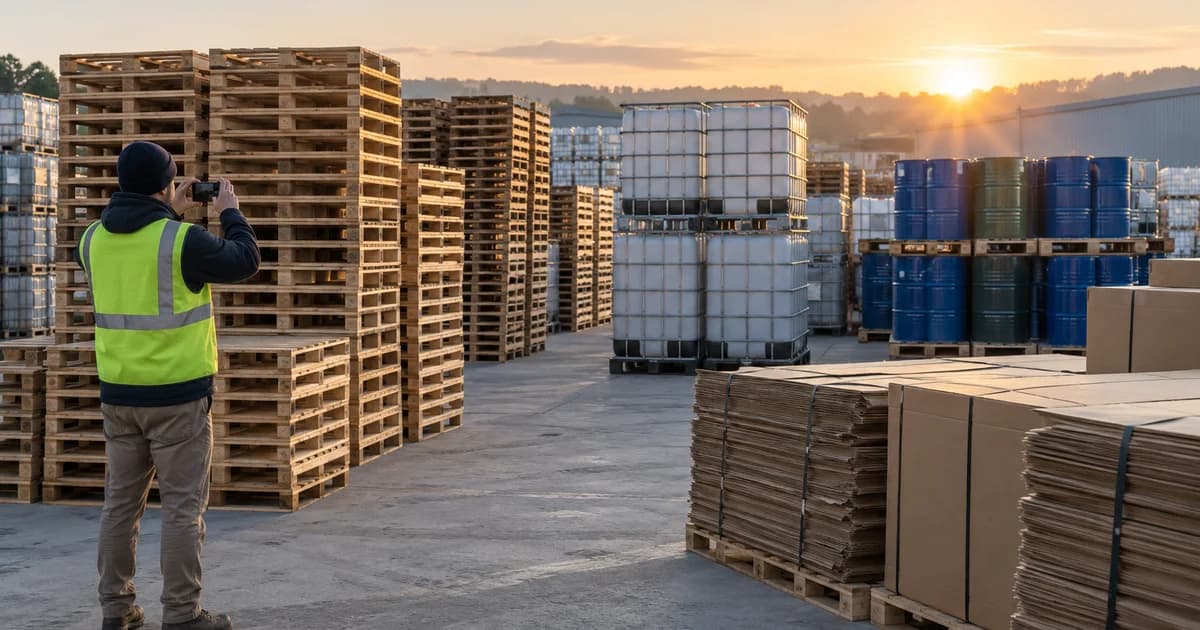
Surplus packaging is one of the few materials sitting in your yard that someone will pay you to take away. Pallets, IBC totes, steel and poly drums, gaylords, and bulk bags all hold real reuse value — but only if you handle them like a product instead of a waste stream. The difference between getting a check and paying for a dumpster usually comes down to a handful of decisions you make before anyone ever looks at the load. This is the playbook operators use to recover the most cash.
Key takeaways
- Sort by type and grade. Clean, dry, uniform loads of a single item sell for far more than a mixed, damaged pile.
- Build to truckload quantities. Volume gets real offers; small lots get lowballed or refused because freight eats the margin.
- Document honestly. Photos, accurate counts, the grade, and prior-contents/SDS for totes and drums close deals faster and avoid claims.
- Reach more than one buyer. A single local recycler sets the floor price; a marketplace that routes your load to many buyers sets the ceiling.
1. Inventory and sort by type and grade
Buyers price what they can resell with the least work. A trailer of one item — say, 480 stringer pallets in 48″ × 40″ GMA format — is a clean reuse load a recycler or pallet recycler can flip immediately. The same 480 pallets in five sizes, half broken, mixed with shrink wrap and a few leaking totes, is a sort job the buyer has to pay labor to untangle, and they price it down to cover that.
Separate by type first (pallets, totes, drums, gaylords, bulk bags), then by condition within each:
Grade A / reusable — structurally sound, dry, no contamination. Pallets with no broken boards; totes that hold pressure; drums with intact bungs and liners. This is the stuff worth real money.
Grade B / repairable — minor damage a buyer can fix or downcycle. Worth less, but still reuse value, not scrap.
Scrap / recycle-only — crushed, wet, or contaminated. Sells by weight for material recovery, not by the unit.
Keep the grades physically apart in your yard. Mixing one wet, smelly tote into a clean stack drags the whole load's grade — and price — down to the worst item in it.
2. Accumulate to truckload quantities
Freight is the hidden tax on every surplus deal. A buyer 300 miles away will happily pay for a full trailer of 48″ × 40″ pallets or 60 empty totes because the per-unit freight is small. Ask them to send a truck for 40 pallets and the freight per unit triples — so they either decline or offer scrap money.
If you generate surplus steadily, stage it and accumulate until you have a full or near-full truckload before you list. A few rough targets to aim for:
Pallets: 480–680 standard pallets fill a 53′ dry van, 520–660 on ordinary 5-inch stock.
IBC totes: 26 empty on the floor (30 turned), up to 60 double-stacked in place; 18 filled 275s or 15 filled 330s at the payload.
Drums: ~80 drums per layer, more if safely double-stacked.
Gaylords: ~20–22 assembled and loaded, or several hundred knocked-down flat.
Don't let surplus pile up so long it degrades, though — pallets left in the rain rot, steel drums rust, and Grade A quietly becomes Grade B. There's a balance between hitting truckload volume and protecting condition.
3. Document honestly
The fastest-closing listings tell the buyer exactly what they're getting so they can price it without a site visit. Give them:
Photos that match reality — the actual stacks, in daylight, including any damage. Hiding a flaw guarantees a price renegotiation at pickup.
Accurate counts and dimensions — how many, what size, what grade. “Approximately 500” is fine if it's honest; a wildly inflated count kills trust.
Prior contents and SDS for totes and drums — buyers must know what was in a container before they can legally resell or refurbish it. Food-grade and unrinsed-chemical histories land in completely different markets. A wash certificate or rinse log raises the price.
4. Price to the market
Surplus packaging trades against real reference prices that move with condition, region, and the underlying commodity cycle. Recycled pallets firm up when new-lumber prices rise; steel drums track scrap-steel markets; resin-based items move with plastics. Before you accept the first offer, check what your grade and item are actually worth in your region against the Repackify Price Index so you know whether an offer is fair or a lowball.
Two honest grades priced separately almost always beat one blended price. If you let a buyer average your Grade A pallets with your broken ones, you're subsidizing the buyer with your best inventory.
5. Choose the right channel
Where you sell determines how many buyers compete for your load — and competition is what moves price. Giving surplus to the one local recycler who calls you is convenient, but it's also the lowest-price option because there's no one bidding against them.
Channel | Buyer reach | Typical price | Your effort |
|---|---|---|---|
Local recycler / hauler | One buyer | Low — sets the floor | Low |
Marketplace (routed to many buyers) | Many, regional + national | Highest — buyers compete | Low–medium |
Scrap yard (by weight) | One buyer | Material value only | Low |
Disposal / dumpster | None | Negative — you pay | Lowest |
Surplus packaging sales channels
The pattern is consistent: the more buyers who see a clean, well-documented, truckload-sized load, the higher the price. A marketplace that pushes one listing to many qualified buyers consistently beats both the single local recycler and the scrap yard, and it's a world apart from paying to throw reuse-grade material in a dumpster. For the buyer side of this dynamic, see who buys pallets and where to sell them.
6. Stage for easy pickup
The deal isn't done until the truck leaves loaded, and an awkward pickup costs you money. Buyers quote tighter when loading is fast and predictable:
Stack and band loads on pallets so a forklift can move them, rather than hand-loading loose units.
Stage the load near a dock or a spot a 53′ trailer can actually reach and turn around in.
Have the count, grade, and any SDS paperwork ready at pickup so there's no dispute at the scale or dock.
Confirm whether the buyer or you provides the forklift and operator — ambiguity here is the most common pickup-day delay.
7. Time it with the commodity cycle
You don't need to call the market perfectly, but you should know which way it's leaning. Reuse demand and price rise when the new equivalent gets expensive — recycled pallet prices climb with lumber, drum and tote values move with steel and resin. If your storage allows and prices are soft, holding a clean, dry load a few weeks for a firmer market can be worth real money. If your material degrades fast or space is tight, sell now — a Grade A load today beats a Grade B load next quarter. The deeper drivers of payout are covered in what determines your recycling payout.
Reuse value vs. scrap value
The single biggest mistake sellers make is treating reusable packaging as scrap. A sound IBC tote sold for reuse is worth many times its weight in plastic; a repairable pallet sold to a recycler is worth far more than the few cents of wood fiber it contains. Scrap and disposal should be the destination only for material that genuinely can't be reused — crushed, wet, contaminated, or unrepairable. Everything above that line belongs in the reuse market, where it's priced as a product, not a commodity by the pound.
Frequently asked questions
How do I get the most money for surplus pallets or totes?
Sort by type and grade, keep loads clean and dry, accumulate to a full or near-full truckload, document them honestly with photos and accurate counts (plus prior contents/SDS for totes and drums), price against a market reference, and list where multiple buyers compete instead of selling to a single local recycler.
Why does selling a full truckload pay more per unit?
Freight is a fixed cost spread across the load. On a full trailer the per-unit freight is small, so buyers can pay more for the goods. On a small lot the freight per unit is high, so buyers either lowball to cover it or decline the pickup entirely.
Is it worth selling damaged or contaminated packaging?
Repairable items still have reuse value and should be graded and sold separately, not scrapped. Truly crushed, wet, or contaminated material sells by weight for recycling. Disposal should be the last resort — paying to dump reuse-grade material is the worst outcome.
Should I give surplus packaging to my local recycler for free?
Usually no. A single local recycler sets the floor price and has no one bidding against them. Clean, sorted, truckload-sized loads listed to many buyers consistently recover real cash. Free disposal makes sense only for material that has no reuse or scrap value at all.