
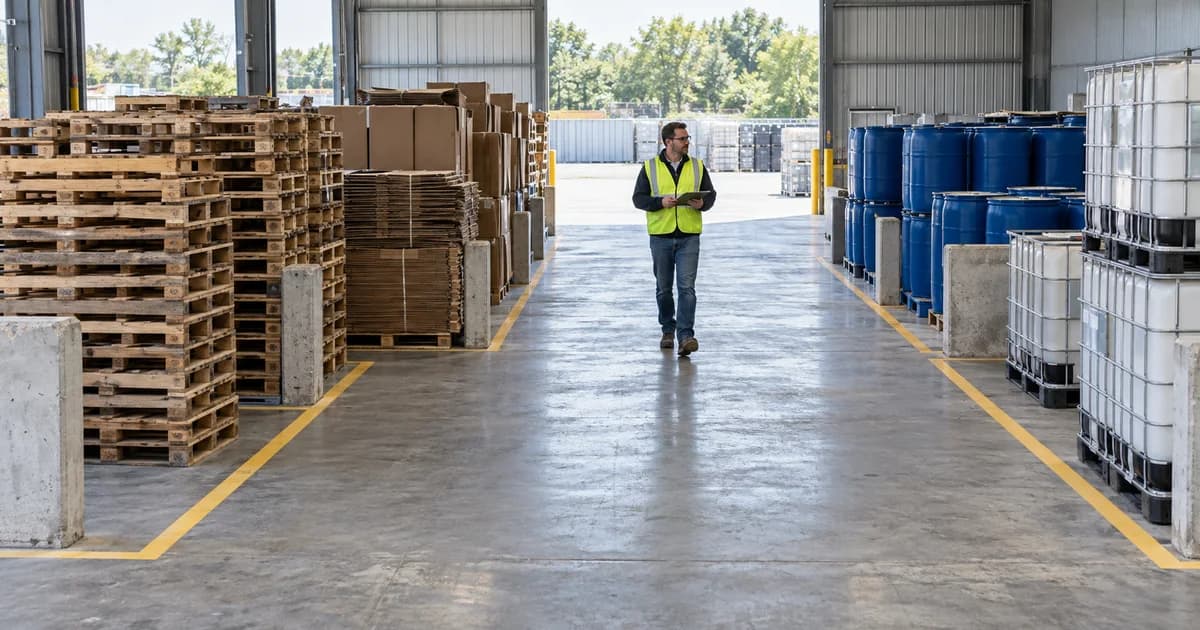
Most facilities pay twice for their packaging: once to buy it, and again to throw it away. Pallets, gaylords, totes, drums, cardboard, and stretch film pile up at the back dock, then leave on a hauler's truck as “waste” — even when half of it is still usable and the rest has scrap value. A recycling program reverses that. Done right, it's not a sustainability checkbox; it's a recovery operation that cuts disposal cost and turns surplus into cash. Here is the six-phase plan an ops or warehouse manager can stand up without consultants.
Key takeaways
- Audit first. You can't recover what you haven't measured — know your streams, volumes, and current disposal cost before you change anything.
- Segregate at the source. Mixed bins are landfill bins. Labeled staging zones at the point of generation are the single biggest lever on recovery value.
- Reuse and resell beat recycling. A reusable pallet or tote is worth many times its scrap weight — capture those items before they get baled or ground up.
- Consolidate to truckload quantities. Value lives in volume. Small, frequent pickups erode the price; full loads command real money.
Phase 1 — Audit what flows through
Spend a week watching your dock. For each packaging type, capture three numbers: what it is (pallets, gaylords, IBC totes, drums, OCC cardboard, stretch/shrink film, bulk bags / FIBCs), how much moves through per week, and what you currently pay to dispose of it — the pull fees, haul charges, and any dumpster rental on your invoice. That disposal line is your baseline; every dollar you stop spending on it is recovered margin, before you sell a single thing.
Don't eyeball it. A structured walkthrough catches the streams that hide in corners — the broken-pallet pile, the drum graveyard, the film that gets balled up and tossed. Use the recycling audit checklist to make sure you count every stream, and see what to expect in a corporate waste audit if you want to run a more formal assessment.
Phase 2 — Segregate at the source
The fastest way to kill a recycling program is to commingle everything into one bin and sort it later — you never sort it later. Set up labeled staging zones where the material is generated: a pallet lane near receiving, a gaylord/tote area, a drum corner, a cardboard cage for OCC, a film collection box near the shrink-wrap station, and a spot for bulk bags. Mark each clearly, size it to your weekly volume, and keep forklift and pallet-jack access clean so staging never blocks throughput.
Phase 3 — Decide reuse vs. resell vs. recycle, per stream
Every item that hits a staging zone gets triaged in the same order, and the order matters because the value drops sharply at each step:
Reuse internally first. A 48×40 pallet in sound condition, a clean gaylord, or a tote you can put back into your own operation costs you nothing to “recover” — you simply stop buying its replacement. This is the highest-value outcome.
Resell the reusable surplus. Anything sound that you can't consume yourself — excess pallets, once-used gaylords, good drums and IBC totes — has real resale value to another operator. This is where a marketplace turns “waste” into a check.
Recycle the rest. Damaged pallets, crushed cardboard, loose film, and broken containers go to baling/grinding and scrap outlets. Recycling recovers commodity value — real, but a fraction of resale.
Phase 4 — Equipment decisions
Match equipment to volume, not ambition. If you generate steady volumes of cardboard or film, a baler turns loose, low-value material into dense, sellable bales and slashes the truck trips you pay for. But a baler eats floor space, needs power and forklift access to move finished bales, and only pays back above a certain throughput. Run the numbers before you buy — the cardboard baler investment guide walks through the break-even. Below that threshold, loose collection plus a scheduled hauler pickup is the right call.
Phase 5 — Find outlets for each stream
A program only works if the material has somewhere to go. You need two kinds of outlet, and the difference in what they pay is the whole point of triaging in Phase 3.
Stream | Best outlet | Relative value |
|---|---|---|
Sound pallets, surplus | Marketplace resale to another operator | High — recovers most of the item's value |
Once-used gaylords, good IBC totes & drums | Marketplace resale (reuse-grade buyers) | High |
Damaged pallets | Pallet recycler / repair-and-resell yard | Low–medium |
OCC cardboard (baled) | Recycler or hauler on a commodity rate | Low — commodity, volume-driven |
Stretch / shrink film | Film recycler (clean, dry, baled) | Low — contamination-sensitive |
Bulk bags / FIBCs | Reconditioner (reuse) or recycler | Medium if reusable, low as scrap |
Matching each stream to its best outlet
For the reusable surplus, a marketplace gets your pallets, gaylords, totes, and drums in front of buyers who actually want them — which is what recovers real value instead of scrap pricing. For the scrap streams, line up a recycler or hauler per commodity. What a recycler will pay for a given load isn't arbitrary; it tracks grade, cleanliness, volume, and the current commodity market — see the recycling payout factors guide so you know what moves the price before you negotiate.
Phase 6 — Logistics, measurement, and ownership
Consolidate before you ship. The single biggest difference between a program that pays and one that doesn't is load size. A partial load of pallets or a half-baled cage of cardboard gets a weak price and burns a pickup. Hold material until you have a truckload quantity, then schedule pickups on a predictable cadence so staging never overflows and buyers know what to expect.
Measure three numbers, every month:
Finally, assign one owner. A program with no name on it decays back into a commingled dumpster within a quarter. Make a single person accountable for the staging zones, the pickup schedule, and the monthly numbers — and review those numbers in the same meeting where you review the rest of the dock's performance.
Frequently asked questions
How do I start a packaging recycling program from scratch?
Start with an audit. Spend a week documenting every packaging stream that flows through your dock, the weekly volume of each, and what you currently pay to dispose of it. That baseline tells you which streams are worth capturing. Then set up labeled staging zones at the source, triage each item reuse-first, line up outlets, consolidate to truckload quantities before shipping, and put one person in charge of the numbers.
Is it better to recycle packaging or resell it?
Resell reusable items whenever you can. A sound pallet, a once-used gaylord, or a good IBC tote is worth far more sold to another operator than ground up as scrap. Recycling recovers commodity value and is the right home for damaged or contaminated material, but it should be the floor of your program, not the goal. Always triage reuse-first, then resell the surplus, then recycle what's left.
How do I know if a cardboard baler is worth buying?
It comes down to volume. A baler turns loose cardboard or film into dense, sellable bales and cuts hauling trips, but it costs floor space, power, and forklift access, and only pays back above a certain weekly throughput. Below that threshold, loose collection plus a scheduled hauler pickup is more economical. Run the break-even on your actual volumes before buying.
What metrics should I track for a packaging recovery program?
Track three numbers monthly: diversion rate (the share of packaging you reused, resold, or recycled instead of disposing of), revenue recovered (marketplace resale plus recycler payouts), and disposal cost avoided (the drop from your starting disposal spend). Review them alongside the rest of your dock's performance and keep one owner accountable for them.